
Soumendra Jena

Serial Entrepreneur & Creator
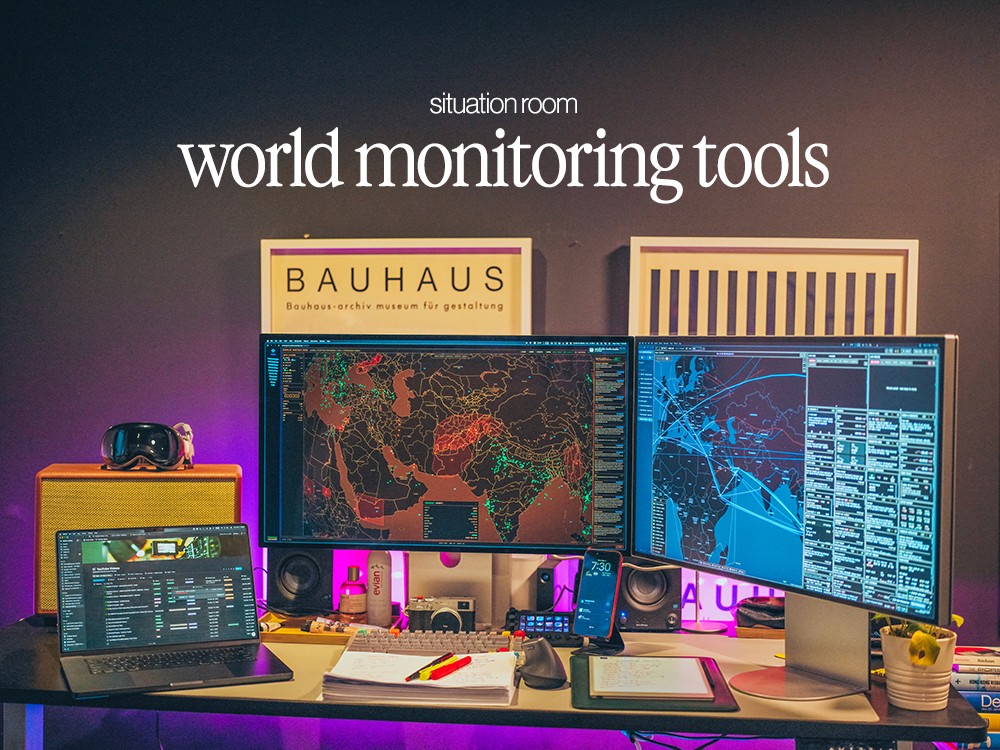
Wars and geopolitical tensions now unfold in real time across the internet. Open source intelligence tools allow anyone to monitor conflicts, troop movements, drone activity, air traffic, and breaking geopolitical developments.
If you enjoy tracking world events closely, these free tools help you follow the situation like a data analyst or intelligence researcher. Below are some powerful websites that aggregate data, maps, cameras, and live updates from around the world.
Monitor The Situation
https://monitorthesituation.org/
This website aggregates real time geopolitical updates from multiple sources. It focuses on live conflict developments, military alerts, and regional updates.
The interface is simple and fast. You can quickly scan headlines and situation updates without browsing dozens of different news websites.
SitDeck
https://sitdeck.com
SitDeck works like a live dashboard for geopolitical intelligence. It combines news feeds, intelligence updates, and monitoring tools in one place.
Researchers and analysts use dashboards like this to track developing stories faster. It helps you see patterns instead of isolated news reports.
World Monitor
https://worldmonitor.app
World Monitor collects global crisis signals and breaking updates from multiple monitoring channels. The platform tracks global events including conflicts, protests, disasters, and security alerts.
The interface highlights active hotspots so you can quickly identify where major events are unfolding.
Glint Trade Terminal
https://glint.trade/terminal
This terminal focuses on financial market reactions to geopolitical events. Wars often move commodities, currencies, and gold prices.
Traders use this dashboard to track market sentiment during geopolitical instability. It helps connect global conflict events with financial market reactions.
Middle East Situation Monitor
https://monitor-the-situation.com/middle-east
This tool focuses specifically on Middle East developments. The page aggregates live updates about conflicts, military movements, and political developments in the region.
It is useful if you want deeper coverage of one specific geopolitical hotspot instead of global news.
OSNT
https://osnt.io/
OSNT stands for Open Source Network Tools. The platform gathers multiple intelligence feeds used by OSINT researchers.
You can explore maps, data feeds, and monitoring tools that track events across different regions of the world.
Situation Room
https://situationroom.io/
Situation Room aggregates military activity signals and conflict related intelligence updates. The platform focuses on structured monitoring instead of traditional news reporting.
It is useful for people who want raw information feeds rather than editorialized news.
Situation Monitor
https://situationmonitor.info/
This site focuses on continuous monitoring of developing geopolitical events. It aggregates data feeds from multiple intelligence sources and news trackers.
The platform helps users follow developing situations without switching between multiple websites.
SchizoPunk Media
https://schizopunk-media.neocities.org/
This is a curated OSINT style page that lists tools, dashboards, and monitoring resources used by independent researchers.
It acts as a directory of interesting monitoring tools and intelligence resources across the internet.
Monitor The Situations
https://monitorthesituations.com/
This website is another monitoring hub that tracks geopolitical events and conflict signals. It aggregates various data feeds into one place.
The platform helps users follow developing war situations without manually tracking multiple intelligence sources.
TrendMoney Iran Monitor
https://www.trendmoney.biz/iran-monitor
This page focuses specifically on developments related to Iran. It tracks political updates, military tensions, and geopolitical developments connected to the region.
Regional monitors like this help you understand deeper context around specific conflicts.
Signal Cockpit
https://signalcockpit.com/?tab=webcams
Signal Cockpit provides access to global webcam networks and monitoring tools. You can view live cameras from different cities and locations.
In crisis situations, public webcams sometimes provide early visual confirmation of events before mainstream news reports them.
You can paste these directly under your existing list of tools in the same style and flow.
liveuamap
https://liveuamap.com
This site provides an interactive live map of conflicts and geopolitical events around the world. It visualizes incidents, troop movements, strikes, and alerts on a map interface so you can quickly understand where things are happening. You can filter by region and conflict type, making it easier to follow specific hotspots or ongoing wars without scrolling through endless text updates.
GDELT Project
https://gdeltproject.org
GDELT (Global Database of Events, Language, and Tone) monitors news media from nearly every country in real time. It turns global events into structured data that can be searched, mapped, and analyzed.
Researchers and analysts use it to detect emerging crises, information operations, and geopolitical shifts based on patterns in news coverage.
SOCRadar Iran–Israel Cyber Conflict Dashboard
https://socradar.io/iran-israel-cyber-conflict-dashboard/
This dashboard focuses on the cyber dimension of the Iran–Israel conflict. It tracks cyber attacks, threat actors, indicators of compromise, and campaign timelines in one place.
It is useful if you want to understand how cyber operations intersect with kinetic military and geopolitical tensions in the region.
Pizzint
https://pizzint.watch
Pizzint monitors OSINT sources, leaks, and dark web activity related to conflicts, security incidents, and geopolitical events. It surfaces interesting findings and indicators that may not appear in mainstream media.
It is especially valuable if you are interested in deeper threat intelligence and early warning signals from non-traditional sources.
ACLED Conflict Index Dashboard
https://acleddata.com
ACLED (Armed Conflict Location & Event Data Project) maintains one of the most detailed conflict event databases in the world. Its dashboards let you explore incidents, fatalities, and conflict trends over time.
You can analyze where violence is increasing, which actors are involved, and how conflicts evolve across regions.
Check Point ThreatCloud / ThreatMap
https://threatmap.checkpoint.com
ThreatCloud’s live cyber threat map visualizes ongoing attacks, malware campaigns, and intrusion attempts detected around the world. It shows where attacks are originating and which regions are being targeted.
During geopolitical crises, this helps you see whether cyber activity spikes alongside military or political escalations.
Conflictly
https://conflictly.app
Conflictly is a conflict monitoring platform that aggregates reports, alerts, and data about ongoing wars and tensions. It provides structured views so you can track timelines and key developments more clearly.
The tool is designed to help you follow specific conflicts without getting lost in fragmented news updates.
Trustparency
https://trustparency.ai
Trustparency tracks global trust in AI, institutions, and information sources. While it is not a pure war tracker, it provides context for how conflicts and crises affect public trust and information ecosystems.
It is useful if you are interested in how propaganda, disinformation, and AI-generated content shape perceptions during geopolitical events.
IntelMapper
https://intelmapper.com
IntelMapper is a mapping-focused intelligence tool that lets you visualize OSINT findings on interactive maps. You can plot locations, incidents, and assets to build a clearer spatial picture of what is happening.
Analysts use it to turn fragmented information into geographic situational awareness.
EyeOnIntel
https://eyeonintel.com
EyeOnIntel aggregates intelligence-style updates, reports, and monitoring feeds about security, conflicts, and geopolitical risk. It functions as a central hub for curated intel signals.
It helps you track multiple domains—military, political, cyber, and economic—without manually collecting sources yourself.
Open‑source Monitoring Tools Index
https://opensourceprojects.dev
This site is a directory of open‑source monitoring and intelligence tools, including projects like ShadowBroker, Crucix, and others. It links to dashboards, scripts, and platforms used by independent OSINT researchers.
It is a great starting point if you want to build your own custom monitoring setup using open‑source tools.
Ukraine Situation Tracker (GitHub)
https://github.com/spectator8/UkraineTracker
This open‑source project tracks the Russia–Ukraine war using structured data, maps, and visualizations. It pulls together multiple data sources into a single situation tracker.
You can explore the code, data, and dashboards to understand how a focused conflict monitor is built from OSINT.
Geoconfirmed — Ukraine War Maps
https://geoconfirmed.org/ukraine
Geoconfirmed verifies and maps geolocated footage and imagery from the Ukraine war. Each marker on the map links to confirmed visual evidence and its source.
This is valuable if you care about verification and want to separate confirmed events from unverified claims on social media.
LostArmour Map
https://lostarmour.info/map
LostArmour maintains detailed maps of destroyed or captured military equipment, with a focus on the Ukraine conflict. It catalogues visually confirmed losses with photos and coordinates.
It helps you understand the material cost of war on the ground—beyond just casualty numbers and headlines.
UAControlMap
https://uacontrolmap.com/map-viewer/
UAControlMap visualizes territorial control in Ukraine, showing which areas are held by which side and how the front lines shift over time.
Territorial control maps like this are essential if you want a clear picture of battlefield dynamics instead of relying only on text updates.
Epstein Fury — Operation Epstein Fury Live War Cost Tracker
Epstein Fury is a real‑time public accountability dashboard for Operation Epstein Fury, the US military campaign in the Middle East that began on February 28, 2026. It tracks the Department of Defense burn rate, estimated total war cost, military and civilian casualties, and a wide range of war‑economy market metrics.
Final Thoughts
Open source intelligence tools have changed how people follow global conflicts. You no longer need access to government intelligence systems to track geopolitical developments.
With the right dashboards and monitoring platforms, you can follow world events, military developments, and market reactions in real time using publicly available information.